

If you have reached out to Weinberger Law and an initial consultation is scheduled, you are about to spend 15 to 20 minutes on the phone with an attorney who has more than 30 years of trial experience. That is valuable time, and the quality of advice you walk away with depends largely on how prepared you are when the call starts.
Brian Weinberger has handled thousands of these consultations across real estate disputes, contract issues, commercial litigation, business fraud, and labor and employment matters. The clients who get the most out of their consultations are not necessarily the ones with the most complicated cases. They are the ones who show up to the call ready to talk about the facts, ready to share their documents, and ready to ask the right questions.
This guide walks through exactly how to do that.
Why 15 to 20 Minutes Is Both Enough and Not Enough
A free consultation is designed to give an attorney enough information to assess your situation, identify the legal issues at play, and tell you honestly whether your matter is worth pursuing. It is not a strategy session, a deep document review, or a courtroom rehearsal. It is the lay of the land.
In a typical 15 to 20 minute window, the attorney needs to understand who you are, what happened, who else is involved, what documents exist, what outcome you want, and whether the firm is the right fit. That is a lot of ground to cover. Every minute you spend hunting for a contract on your desktop, scrolling through old emails to find a name, or trying to remember a date is a minute taken from real legal analysis.
The good news is that with 15 minutes of preparation before the call, you can dramatically increase how much value you get out of it.
1. Have Your Documents Ready Before the Call
Roughly 70 percent of the calls Weinberger Law receives involve a contract of some kind. That includes real estate purchase agreements, employment agreements, non-competition agreements, business purchase agreements, leases, operating agreements, and contracts for the sale of property. Whatever brought you to the call, there is a strong chance a written document sits at the heart of the matter. (If your case involves contract issues, a non-compete or anti-piracy agreement, or a real estate dispute, the contract is going to be the first thing the attorney asks about.)
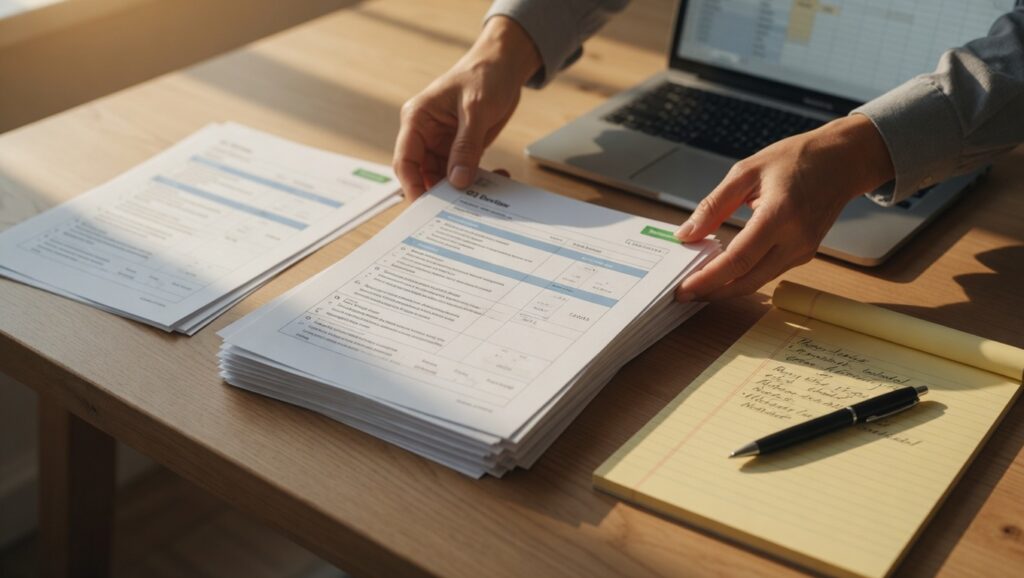
Before the consultation, gather every document related to your matter and have them open or printed in front of you. The attorney will ask specific questions about terms, dates, signatures, and provisions, and if the documents are not within reach, the conversation slows to a crawl.
If your matter involves real estate
Words alone often cannot describe what is happening on the ground. For property line disputes, easement conflicts, and other real estate matters, visuals do most of the explaining. Have the following ready:
- A plat of the property (the official survey or map)
- Photographs of the area in dispute
- Any title documents, deeds, or recorded easement language
- Correspondence with the other party (letters, texts, emails)
Around 80 percent of real estate consultations end with the attorney needing to see a picture or plat to make sense of the situation. Having these on hand before the call starts means you can email them over in real time and walk through the issue together rather than describing geometry over the phone.
If your matter involves a business or contract dispute
Whether you are dealing with a commercial litigation matter, a case of business fraud, or a labor or employment dispute, the underlying paperwork is what the attorney will work from. Pull together:
- The contract or agreement at issue, fully signed and dated
- Any amendments, addenda, or side letters
- Email or text correspondence relevant to the dispute
- Invoices, payment records, or financial documents if money is in question
- A short written timeline of what happened and when
2. Be Ready to Send Documents Electronically
Most consultations move faster when both sides can look at the same document at the same time. That means having email access on whatever device you are using during the call, and being ready to send documents over the moment they are requested.
Two important rules when sending documents to an attorney:
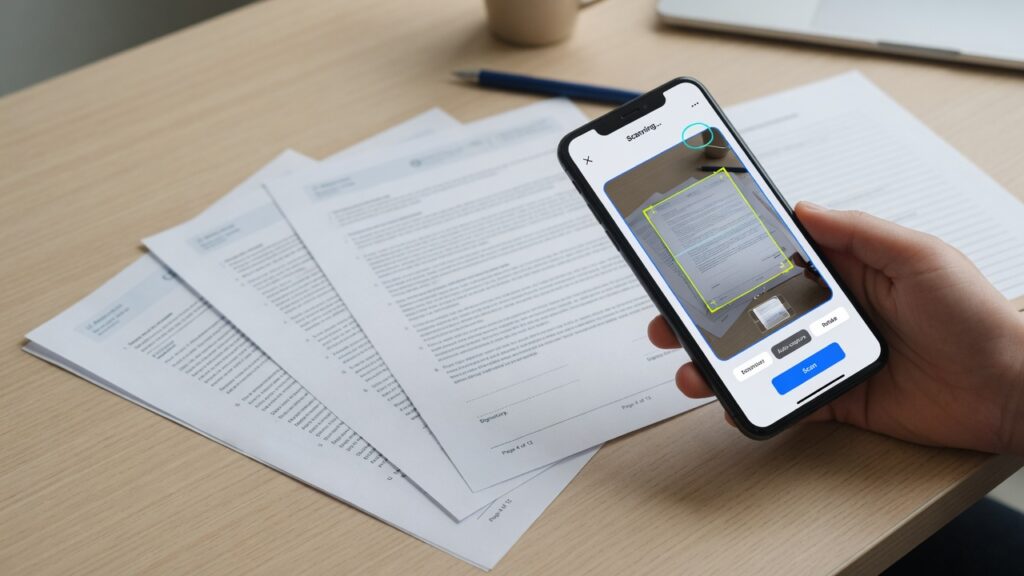
First, send PDFs, not photos of pages. A multi-page contract should be a single PDF document containing every page in order. A folder full of JPEGs of individual pages, or a string of phone photos sent one at a time, does not work. The attorney cannot read it efficiently, and the conversation breaks down while you try to find page 4.
Second, send the complete document, not just the section you think matters. Contracts are read in full because what is missing from one section often affects the meaning of another. Scan or save the entire agreement, including signature pages and exhibits, as one PDF.
Most modern smartphones have a built-in document scanner. On iPhone, open the Notes app, tap the camera icon, and choose Scan Documents. On Android, the Google Drive app has a similar scan feature. Both produce real PDFs that work for legal review.
3. Be Available When the Attorney Calls Back
This is one of the most overlooked parts of preparing for a consultation, and it has a real impact on whether your matter moves forward.
When you leave a message at Weinberger Law, the attorney often calls back within minutes. If you are not near your phone when that return call comes through, the moment passes. The same is true if your voicemail box is not set up or is full, since there is no way to leave a message asking you to call back again.
A few simple steps make a meaningful difference:
- Stay near your phone after leaving an initial message
- Check that your voicemail box is set up and has room for new messages
- Watch your email in case the attorney follows up that way
- If you have to step away, be ready to step right back when you see the call come in
Life happens, and no one expects you to be glued to your phone all day. But the consultations that move forward are almost always the ones where the prospective client picked up when the firm reached out.
4. Call from a Quiet, Private Location
This sounds obvious until you realize how often it is ignored. Consultations get taken from job sites with heavy machinery running, from car interiors at gas stations, from coffee shops with espresso machines screaming in the background, and from open offices where colleagues are clearly within earshot.
There are two reasons location matters.
The first is practical. If the attorney cannot hear you clearly, they cannot give you good advice. Legal questions are detail-heavy. Names, dates, dollar amounts, and contract terms have to be heard accurately, and ambient noise makes that nearly impossible.
The second is confidentiality. The information you share during a consultation is sensitive. You do not want a coworker, family member, or stranger overhearing details about a contract dispute, a fraud allegation, or a property fight with a relative. Find a private space, even if it is just your parked car, before you make or take the call.

Your Pre-Call Checklist
Here is a short checklist to run through before your consultation begins:
- All relevant contracts and documents pulled up or printed in front of you
- Documents saved as full PDFs, not photo collections
- Visuals (plats, photos, surveys) ready if the case involves real estate
- A one-paragraph written summary of what happened, in order, with dates
- Names and contact information for the other parties involved
- Email open on your phone or computer so you can send documents in real time
- Voicemail box confirmed working and not full
- A quiet, private location to take the call
- A pen and paper for notes
- A short list of questions you want answered
If you can check off every item on this list, you are going to get more out of 15 minutes than most people get out of an hour.
What to Expect on the Call
Most consultations follow a similar arc. The attorney will introduce themselves briefly and ask you to walk through the situation. Expect to be interrupted with clarifying questions, especially about the documents. By the end of the call, the attorney should be able to tell you whether the firm can help, what the next step would be if you decide to move forward, and a general sense of timeline and approach. For answers to other common questions about working with an attorney, you can also review our FAQ page.
Not every consultation ends with a path forward, and that is by design. Part of the value is hearing an honest assessment of whether your matter is worth pursuing. A trial attorney with 30 years of experience can usually tell within 15 minutes whether a case has legs.
Ready to Schedule Your Consultation?
If you have a real estate, contract, business, employment, or commercial dispute and you want a straight answer from a Phoenix-area attorney with three decades of trial experience, Weinberger Law is ready to take your call.
Call (480) 536-9991 or Fill out the contact form on our website
We serve clients in Scottsdale, Phoenix, and throughout the state of Arizona.